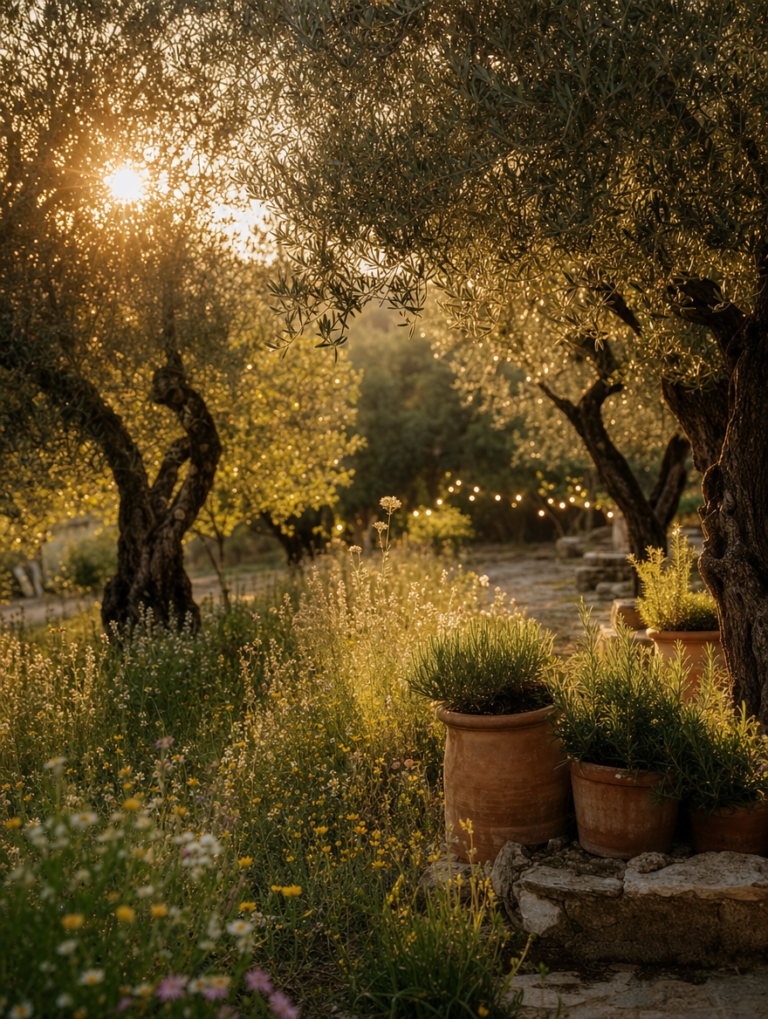
A wedding is, at its heart, a threshold. Two people walk in, and something different walks out. The flowers are not decoration — they are witnesses. They mark the moment, hold the memory, and return, pressed in a book or dried in a frame, to remind us of the day we stepped across.
I have planned weddings, attended weddings, wept at weddings, and — on one memorable occasion — scrambled up a ladder in a silk dress to rescue a fallen garland at a wedding. What I have learned is this: the flowers that matter most are never the ones you planned for. They are the ones that surprise you.
The Ceremony: Where Flowers Speak Loudest
The ceremony is the part of the wedding where flowers do their most important work. This is not about centrepieces or table arrangements — those come later, in the blur of the reception. The ceremony flowers are the ones that frame the moment itself: the vows, the ring, the kiss.
For a garden wedding, consider an arch that is more garden than structure — a wooden frame so densely packed with flowering vines, garden roses, and trailing greenery that it appears to have grown there for a century. Clematis, jasmine, and sweet pea woven through with blush garden roses and pale lavender wisteria create a living portal. The couple stands not beneath an arrangement but within a garden.
For an indoor ceremony, the altar meadow is the most beautiful invention of the last decade. Rather than two formal pedestal arrangements flanking the couple, imagine a wild, ground-level sweep of flowers and grasses that spills across the altar steps and pools at the edges like a tide. Foxgloves, delphiniums, garden roses, and campanula rising from a meadow of ferns and grasses — as though a corner of an English meadow had been transported indoors for the afternoon.
The aisle itself deserves more than a few scattered petals. Consider lining the aisle with low, dense arrangements in weathered terracotta pots or vintage copper vessels — clusters of hydrangea, rose, and eucalyptus that guests brush past as they find their seats. The scent lingers on sleeves and scarves for hours afterward.
The Bridal Party: Botany to Wear
The bridal bouquet is the single most photographed flower arrangement of the day. It will appear in every portrait, every close-up of hands, every detail shot. It should feel like the bride, not like the florist.
For the romantic bride, a loose, garden-gathered bouquet of garden roses, sweet peas, jasmine vine, and a few stems of something unexpected — a single dark dahlia, a spray of blackberries still on the vine, a feather. The stems should be tied with silk ribbon in a colour that means something: the blue of a grandmother’s eyes, the green of the garden where you first met.
For the modern bride, consider a monochrome composition: all white flowers, but in every texture imaginable. Papery ranunculus, velvet garden roses, frothy spirea, architectural calla lilies, and the ghostly transparency of sweet pea. The effect is not stark but sculptural — a bouquet that reads as a single, luminous object.
The bridesmaids deserve more than smaller versions of the bride’s bouquet. Give each bridesmaid a different flower — one carries peonies, another sweet peas, another hydrangea — so that together they form a garden, and individually they each have something that feels personal. The flower girl, if there is one, should carry a basket of loose petals or a single perfect bloom on a ribbon.
The Reception: Where Flowers Dance
The reception is where flowers become atmosphere. By this point in the evening, nobody is looking closely at arrangements. What they remember is the feeling of sitting in a room that felt alive.
For long banquet tables, the garland is still the most romantic choice. A runner of eucalyptus, ivy, and smilax punctuated with roses, dahlias, and clusters of seasonal fruit — figs, pears, small apples — creates the impression that the table has been set in an orchard that happened to be in bloom. Candles in glass hurricanes should nestle within the garland, not sit beside it; the light should come from within the garden.
For round tables, vary the heights. Some tables get tall arrangements on slender stands — delphiniums and branches that draw the eye up without blocking conversation. Others get low, sprawling compote arrangements that guests can see over. The variety makes the room feel organic, unplanned, as though the flowers arrived of their own accord.
And do not forget the unexpected places: a single stem in the powder room, a small posy at each place setting, a wreath on the door of the venue that greets guests before they have even stepped inside. These are the details that guests may not consciously notice but would certainly notice if they were absent.
The Flowers That Last
The wedding ends, but the flowers do not have to. A growing number of couples are commissioning their wedding flowers to be dried and framed — the bouquet, the ceremony arch flowers, even individual stems from the tables — as a permanent artwork for their home. Others donate their flowers to hospitals and care homes, where they bring a moment of beauty to people who could not attend.
And then there is the tradition, old as weddings themselves, of pressing a single flower from the bouquet. Between the pages of a book, flattened and faded, it waits. Years later, when the book is opened, the flower falls out. It is paper-thin, nearly transparent, the colour ghosted away to sepia. But it still holds the shape of the day. It still remembers.